2026-10-19 ·
Toilet Overflow vs. Main Sewer Line Clog: How to Identify the Source
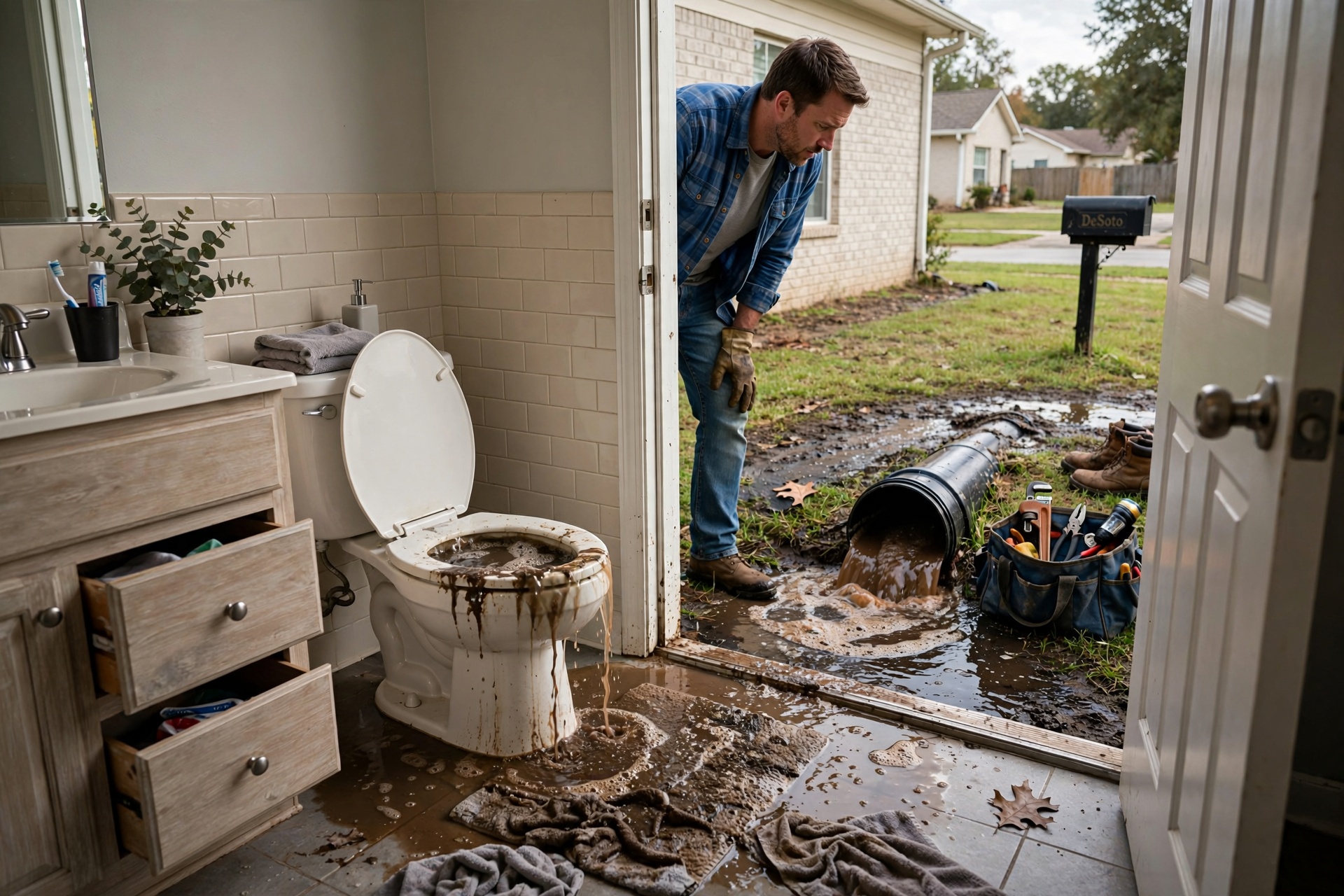
A toilet overflow that remains at one fixture typically indicates a localized clog in the trap or branch line, whereas simultaneous backups in tubs, showers, or floor drains across the home signal a main sewer line clog in Dallas County homes.
Signs of a Localized Toilet Clog
When only the toilet backs up and other drains function normally, the problem usually sits between the fixture and the main stack. Homeowners in North DeSoto often notice gurgling only after flushing, with water rising and receding in the bowl but staying clear of other fixtures. In homes near Moseley Park, older cast-iron branches common to 1970s construction trap paper and wipes more readily than PVC lines. Check the vent stack on the roof during hot summer days when humidity rises; a clear vent rules out roof-level blockage. If the issue stays isolated, professional toilet overflow cleanup can resolve it without excavation.
Indicators of a Main Sewer Line Clog
Multiple drains backing up at once, especially on the lowest level, points to a blockage past the house trap or in the lateral to the street. Residents along the Hampton Road Corridor see this after heavy rains when clay soil swells and shifts older lines. Water may appear in floor drains near the DeSoto Recreation Center area before reaching toilets, carrying darker sediment. Slow drainage in both kitchen and bath areas simultaneously, even when only one toilet is used, confirms the main line involvement. These cases require sewer backup cleanup to locate and clear the obstruction before it affects neighboring properties in Downtown DeSoto.
Climate and Soil Factors in DeSoto
DeSoto's humid subtropical climate brings hot summers that dry surface soil while deeper roots from nearby trees push into sewer joints. Mild winters reduce freeze damage but allow constant root growth in Dallas County laterals. Properties in Cedar Hill and Duncanville share similar red clay soils that expand during spring rains, stressing older sewer pipes installed before 1990. When a main line fails, wastewater surfaces faster in low-lying yards near Belt Line District. Seasonal patterns mean calls increase after prolonged dry spells followed by sudden downpours that flush debris into compromised lines.
Steps to Confirm the Source
Turn off water to the affected toilet and run water in a distant sink or tub. If the toilet bowl rises without the distant fixture draining, the clog is likely in the branch line. Listen for gurgling in other drains when flushing; simultaneous sounds indicate shared line blockage. Note any sewage odor strength—stronger odors near multiple fixtures suggest main line involvement. For persistent cases, contact 24/7 Emergency Service at 917 N Hampton Rd, DeSoto, TX 75115 to scope the line before damage spreads to finished floors.
Health and Cleanup Considerations
Both scenarios involve wastewater that can contain pathogens, but main line backups often carry higher volumes and reach finished areas faster. Porous materials like carpet padding in North DeSoto homes absorb contaminants quickly, requiring removal rather than cleaning. After identification, proper extraction and sanitization prevent secondary issues. Readers can review related guidance on how fast mold forms after wastewater overflow or why household bleach fails on porous surfaces. For fixture-specific problems, toilet overflow cleanup addresses the immediate source while sewer backup cleanup handles deeper laterals.