2026-10-19 ·
Category 3 Black Water: Why Raw Sewage Requires Professional Hazmat Extraction
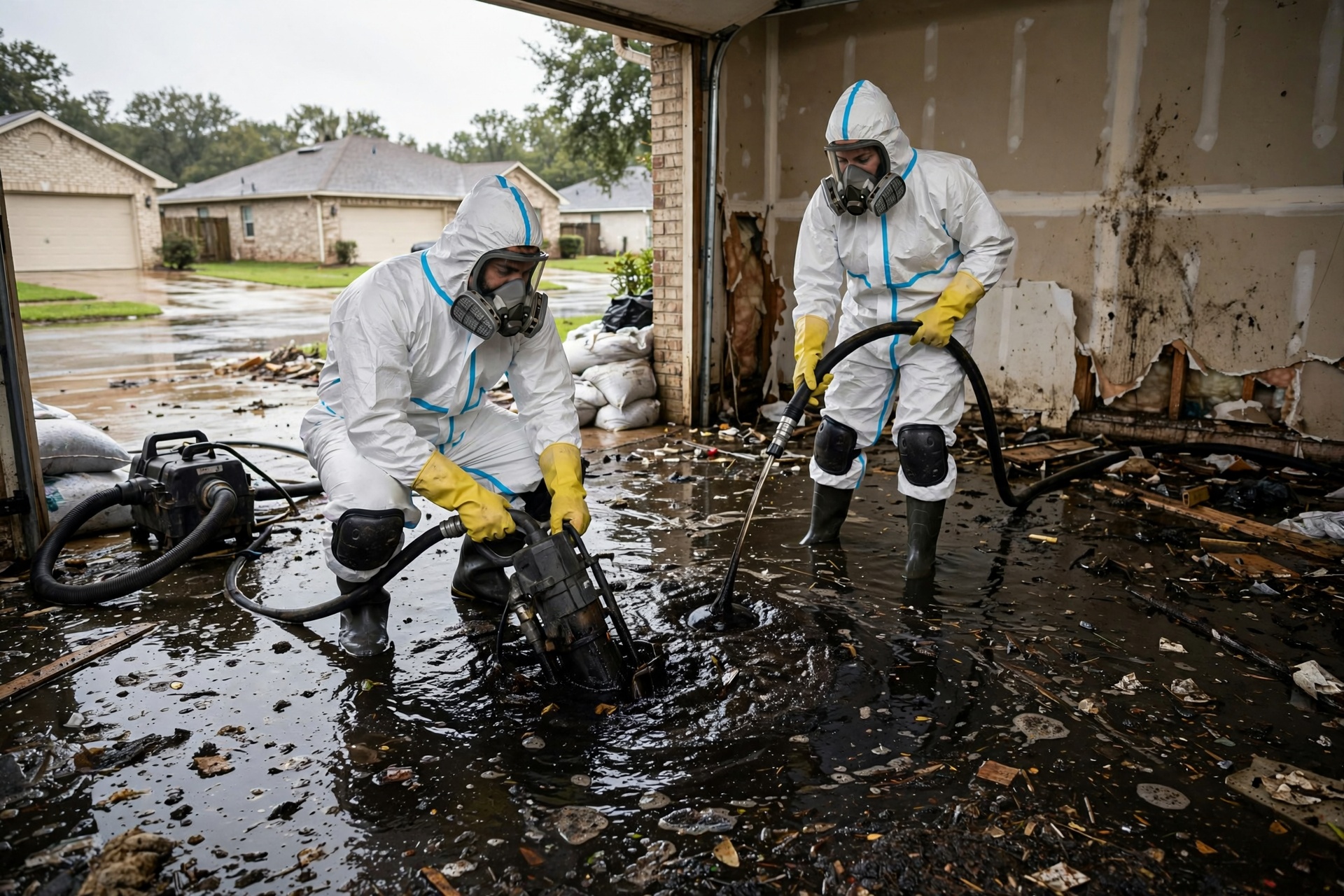
Raw sewage labeled Category 3 black water requires professional hazmat extraction because it contains concentrated pathogens that penetrate porous materials and aerosolize during removal, creating exposure risks that standard cleaning cannot contain.
Pathogens Present in Category 3 Black Water
Raw sewage carries E. coli, Salmonella, hepatitis A, and parasitic organisms that remain viable for days or weeks once released. In DeSoto's humid subtropical climate with hot summers and mild winters, these microbes multiply quickly on surfaces inside homes near Downtown DeSoto or North DeSoto. Homeowners who attempt extraction without containment often spread contaminants through HVAC systems or foot traffic, turning a localized backup into widespread exposure. Professional teams use negative air machines and sealed barriers to isolate the affected zone before any liquids are removed.
Why Standard Cleanup Equipment Falls Short
Household vacuums and mops cannot capture microscopic particles embedded in subflooring or wall cavities common in older Dallas County properties. Once black water saturates carpet padding or drywall, the material must be cut out and disposed of as hazardous waste rather than cleaned on site. Sewage extraction and removal crews follow EPA guidelines that require PPE, HEPA filtration, and licensed transport of contaminated debris. DIY efforts frequently leave behind moisture that later fuels mold colonies.
Local Conditions That Increase Exposure Risk
DeSoto sits on flat terrain in Dallas County where poor drainage after heavy summer storms allows sewage to pool against slab foundations. Homes along the Hampton Road Corridor and near Moseley Park often feature 1970s-era plumbing that cracks under shifting clay soils. When backups occur near the DeSoto Recreation Center or in neighborhoods bordering Duncanville and Cedar Hill, the warm, moist air accelerates bacterial growth within 24 to 48 hours. How Fast Can Dangerous Mold Form After a Wastewater Overflow? outlines the timeline crews observe on these jobs.
Step-by-Step Hazmat Extraction Process
Trained technicians first assess the source and establish containment using plastic sheeting and air scrubbers. They then extract standing water with truck-mounted units rated for biohazards, followed by removal of saturated building materials. All surfaces receive application of hospital-grade disinfectants proven effective against Category 3 organisms. Final verification includes moisture readings below 15 percent and ATP swab tests before any reconstruction begins. This sequence prevents cross-contamination between rooms and protects neighboring properties in multi-unit buildings.
When to Call for Immediate Response
Residents in DeSoto experiencing sewage backup should avoid the area and contact 24/7 Emergency Service at 917 N Hampton Rd rather than attempting containment themselves. Delaying professional intervention allows pathogens to migrate into adjacent living spaces and increases the volume of material requiring disposal. Black water cleanup teams arrive with the necessary equipment and disposal permits that residential properties lack, ensuring the job meets Dallas County health department standards from the first visit.