2026-10-19 ·
Step-by-Step Sewage Odor Elimination for Dallas County Homes
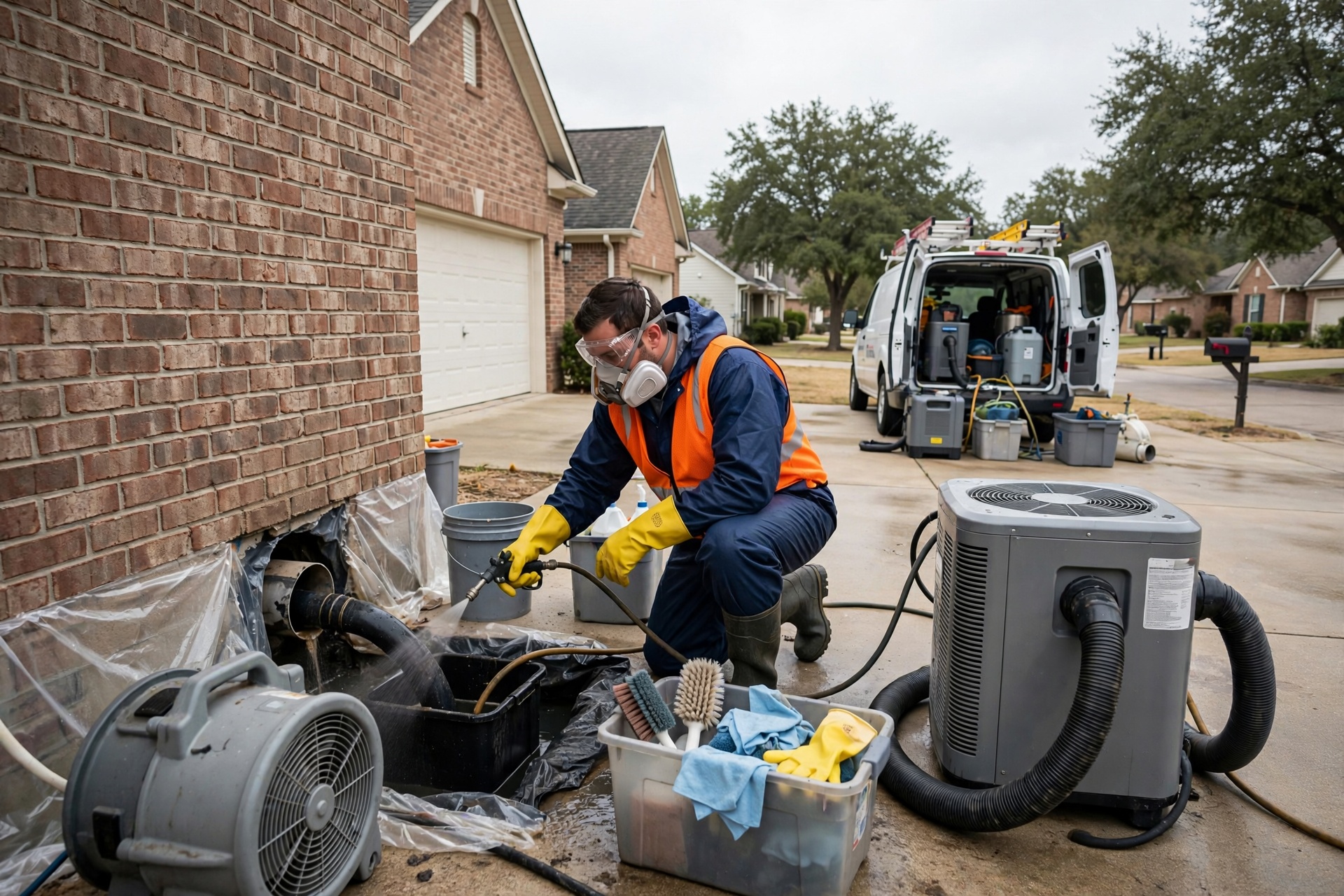
Sewage odor elimination in Dallas County homes typically requires 3–7 days of targeted work once extraction begins, depending on the volume of affected material and how deeply contaminants have wicked into subflooring or drywall in neighborhoods like North DeSoto.
Initial Safety and Containment Steps
Before any odor work starts, crews isolate the affected zone with plastic sheeting and negative air machines to keep vapors from migrating into living spaces. In DeSoto homes built on concrete slabs near the DeSoto Recreation Center, sewage often travels under the slab and resurfaces through expansion joints, so technicians first map moisture with infrared cameras. Residents should avoid the space until air monitoring confirms safe levels. Proper PPE including respirators rated for hydrogen sulfide is mandatory because Dallas County summers push temperatures above 95°F and accelerate gas release. This phase prevents cross-contamination into adjacent rooms common in older North DeSoto housing stock.
Source Location and Extraction
Technicians trace the odor back to the entry point, often a broken line under the slab or a clogged main serving homes along the Hampton Road Corridor. In DeSoto’s humid subtropical climate, even small leaks create standing water that soaks carpet pad and base plates within hours. Sewage extraction and removal removes the bulk liquid first using truck-mounted units rated for 500 gallons per minute. Crews then cut and dispose of saturated drywall up to 18 inches above the water line. This step alone can reduce odor intensity by 60–70% before any neutralizers are applied.
Disinfection and Material Removal
After extraction, surfaces receive EPA-registered disinfectants applied in two coats with 10-minute dwell times. Sewage disinfection and sanitization targets porous materials that trap bacteria in the alkaline soils typical of Dallas County. Contaminated carpet, padding, and insulation are bagged and removed to prevent re-release of odors when humidity spikes during mild winters. In homes near Moseley Park where yards slope toward foundations, crews also inspect exterior cleanouts for ongoing seepage that could reintroduce contaminants.
Odor Neutralization Process
Once the source is gone, technicians apply a two-stage odor counteractant: first an enzyme digestant that breaks down organic residues, then a vapor-phase neutralizer circulated through the HVAC system for 24–48 hours. Sewage odor removal protocols include placing activated charcoal filters in return vents to capture lingering molecules. In DeSoto’s hot summers, dehumidifiers run continuously at 45–50% RH to stop new bacterial growth on remaining surfaces. Follow-up air sampling confirms hydrogen sulfide and ammonia levels have dropped below detectable thresholds before drywall replacement begins.
Long-Term Prevention in Local Conditions
Homeowners in Downtown DeSoto and nearby Duncanville or Cedar Hill can reduce repeat issues by scheduling annual sewer camera inspections, especially on 40–60-year-old lines common under slab homes. After heavy rains, check cleanouts for slow drainage that signals root intrusion or offset joints. Signs of a broken sewer line beneath a concrete slab foundation provides additional indicators specific to the area’s soil movement. Keeping gutters clear around properties near Belt Line District prevents hydrostatic pressure that forces sewage back into homes during storms.