2026-10-19 ·
Why Household Bleach Won't Sanitize Porous Materials After a Sewage Spill
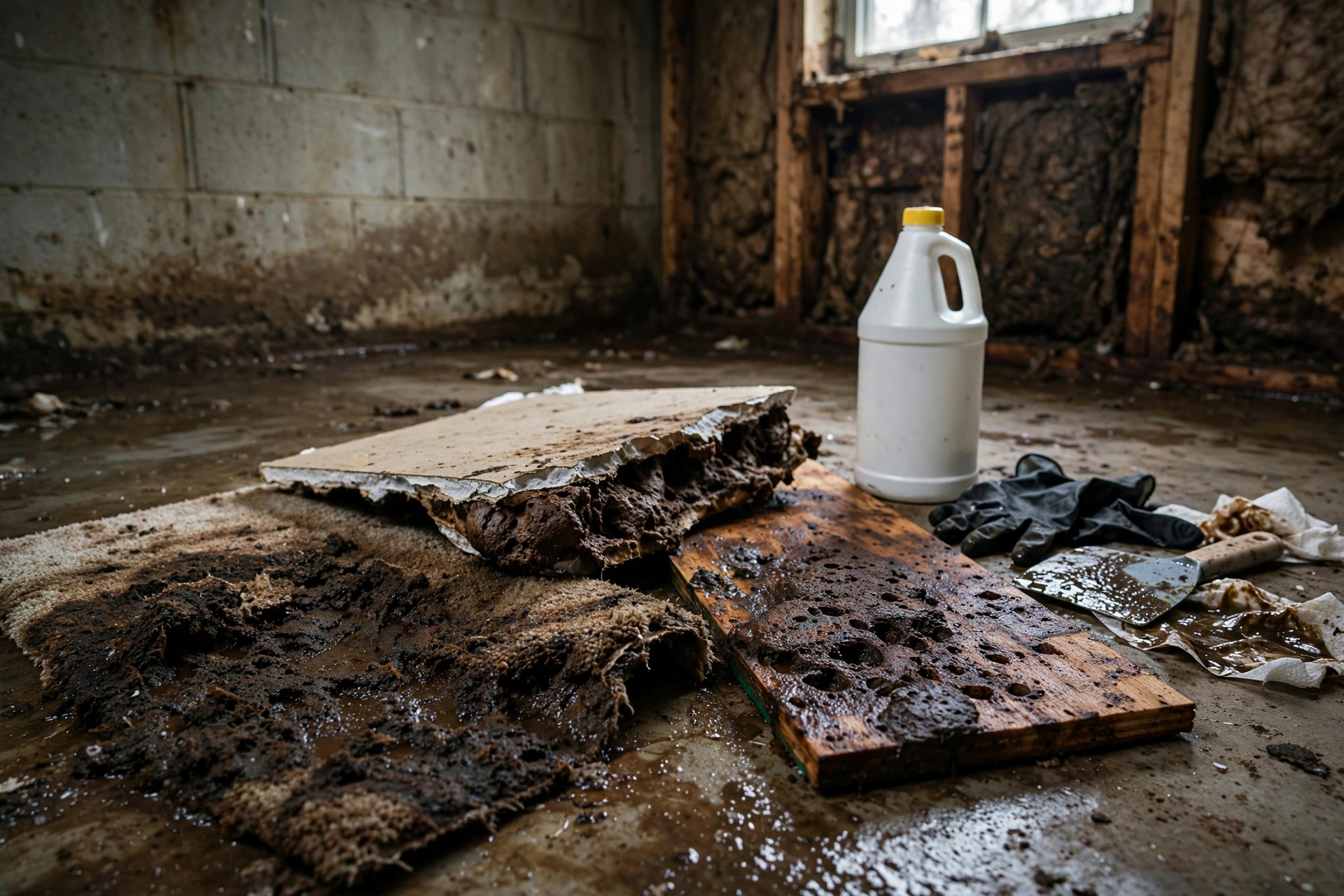
Household bleach fails to sanitize porous materials after a sewage spill because it cannot penetrate beyond the outer surface and evaporates before reaching embedded pathogens in carpet padding, drywall or subfloor wood. In DeSoto homes built on North Texas clay soil, sewage from backups often saturates these layers during humid subtropical summers when heavy rains overwhelm older sewer lines.
Why Surface Disinfection Leaves Hidden Risks
Bleach solutions applied with mops or sprayers sit only on exposed faces of materials and break down within minutes in warm DeSoto conditions. Pathogens such as E. coli and viruses remain viable inside the pores of gypsum board or particleboard for days afterward. Downtown DeSoto properties with 1970s-era construction often feature carpet glued directly to concrete slabs that trap moisture and contaminants below the surface. Mild winters keep soil temperatures higher, slowing natural die-off and allowing regrowth when humidity rises again. Professional sewage disinfection and sanitization uses EPA-registered agents delivered under pressure to reach those depths.
How Sewage Moves Through Local Building Materials
Sewage backup removal in North DeSoto and near Moseley Park frequently involves water traveling through floor joists and wall cavities after main-line clogs. The region's clay-heavy soil expands during storms, forcing wastewater upward through foundation cracks and into porous underlayment. Once inside drywall, the liquid travels laterally along paper facing and settles in the bottom 12–18 inches of each sheet. Carpet fibers wick liquid upward while padding absorbs and holds it against the slab. These conditions differ from homes in nearby Duncanville or Cedar Hill only in the age of the plumbing, but the material behavior stays identical across Dallas County.
Extraction and Removal Steps That Actually Work
Technicians begin by removing standing water with truck-mounted extraction units rated at 500+ CFM to pull liquid from saturated carpet and pad within the first hour. Next they cut away the bottom 24 inches of affected drywall and dispose of it as contaminated waste rather than attempting to clean it. Wood subfloors receive negative-air drying combined with antimicrobial rinses that stay in contact long enough to reach the grain. Contaminated material removal prevents cross-contamination when crews transport debris through living spaces in neighborhoods like the Hampton Road Corridor.
Climate Factors That Reduce Bleach Effectiveness
DeSoto's hot summers push indoor temperatures above 90 °F even with air conditioning, causing bleach to off-gas rapidly before it can oxidize organic matter deep in materials. High ambient humidity keeps porous surfaces from drying between applications, diluting any remaining active chlorine. Winter storms still produce enough inflow to trigger backups near the DeSoto Recreation Center, yet cooler air slows evaporation and leaves moisture trapped longer. These seasonal patterns make one-time surface spraying insufficient and favor staged extraction followed by targeted sewage extraction and removal.
When Professional Protocols Replace DIY Attempts
Homeowners who have already tried bleach on carpet or baseboards in Thorntree or Elerson Ranch often discover persistent odors weeks later because the source remained inside the slab or wall cavity. Proper protocol includes air sampling for hidden moisture and application of hospital-grade disinfectants that maintain contact time measured in hours, not minutes. How North Texas Clay Soil & Heavy Rains Trigger Sewer Backups in DeSoto explains the soil mechanics that repeatedly deliver sewage into these same porous assemblies. Crews at 917 N Hampton Rd respond 24/7 to address the full depth rather than the visible film.